
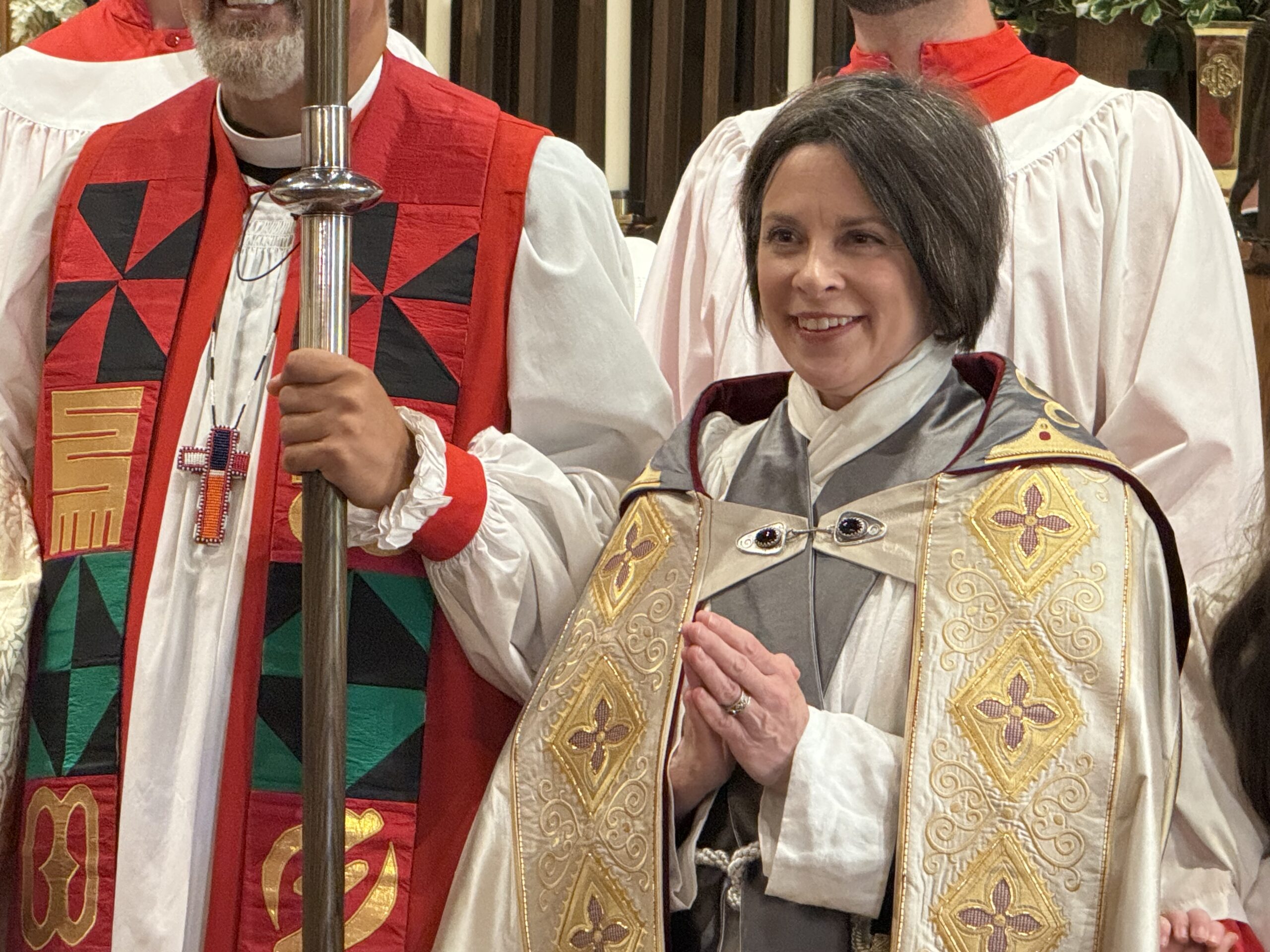
The final stages of the Centenary Cope brought together months of design, embroidery, and shared work into a single garment. This phase is less about invention and more about resolution—aligning structure and meaning so the cope could move from the studio into liturgical use.
Final Assembly
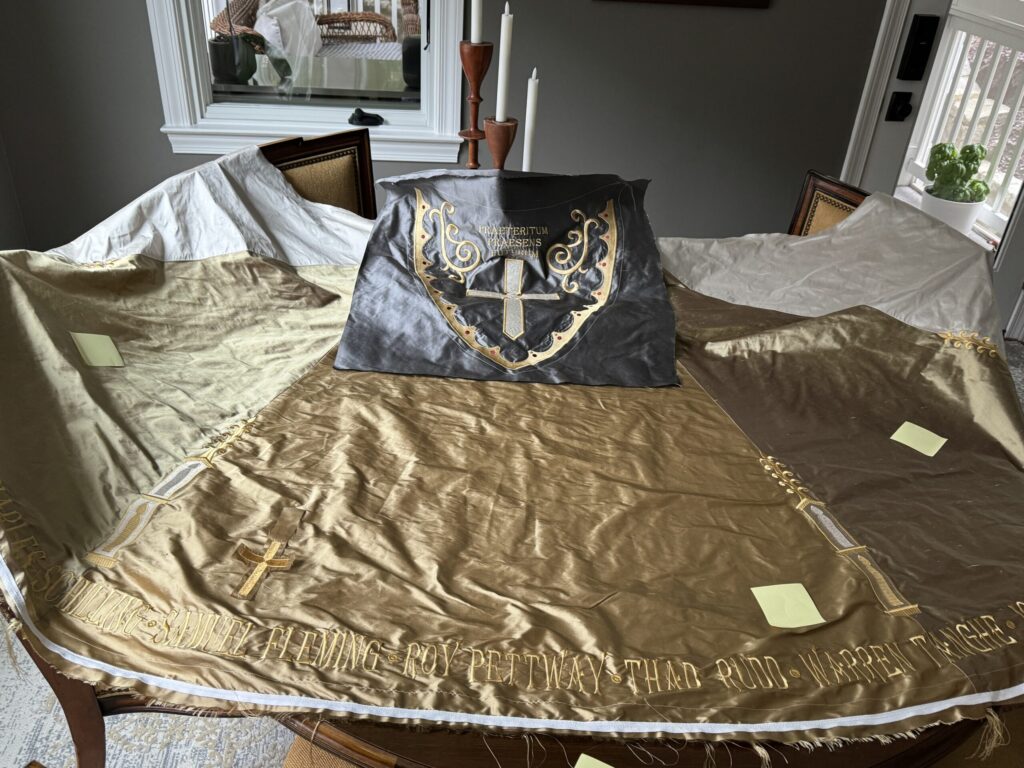
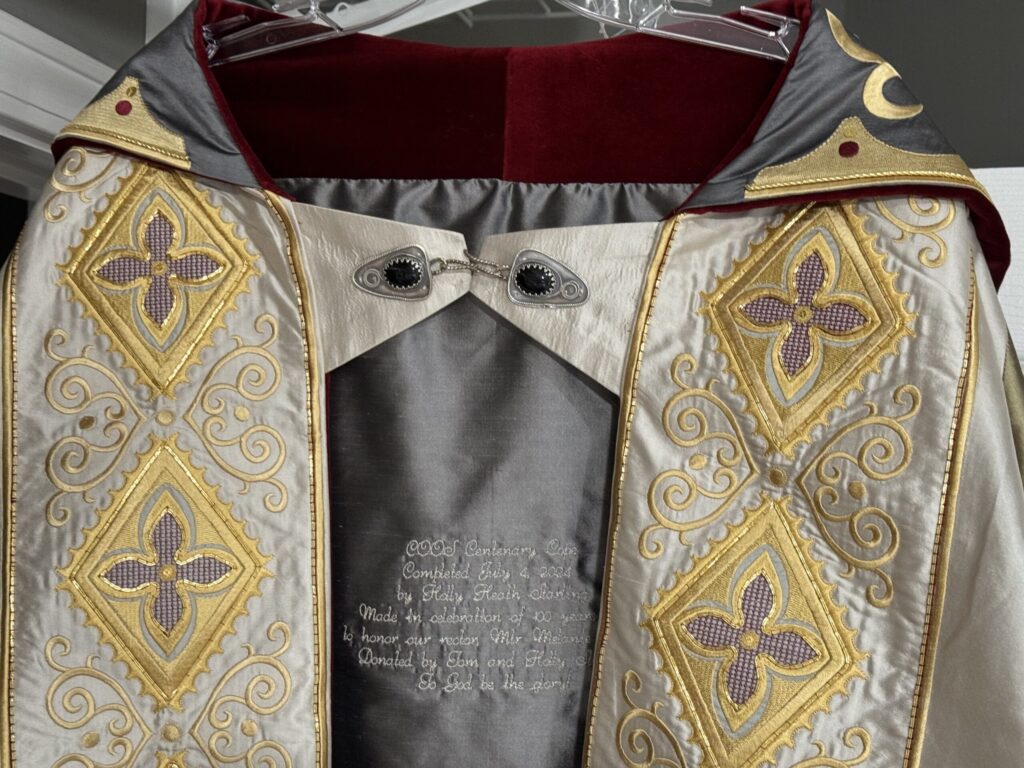
With the embroidery complete and the parish-worked elements returned, the cope entered its final assembly phase. The final layout determined, the embroidery pieces attached, the lining added and the closure set. Careful attention was paid to balance and weight, ensuring that the cope would move well in procession and settle naturally when worn.
This stage is where individual decisions—made weeks or months earlier—either cohere or demand reconsideration. Fortunately, most of the work resolved quietly, just as it should.
An Unexpected Accident Creates Clarification
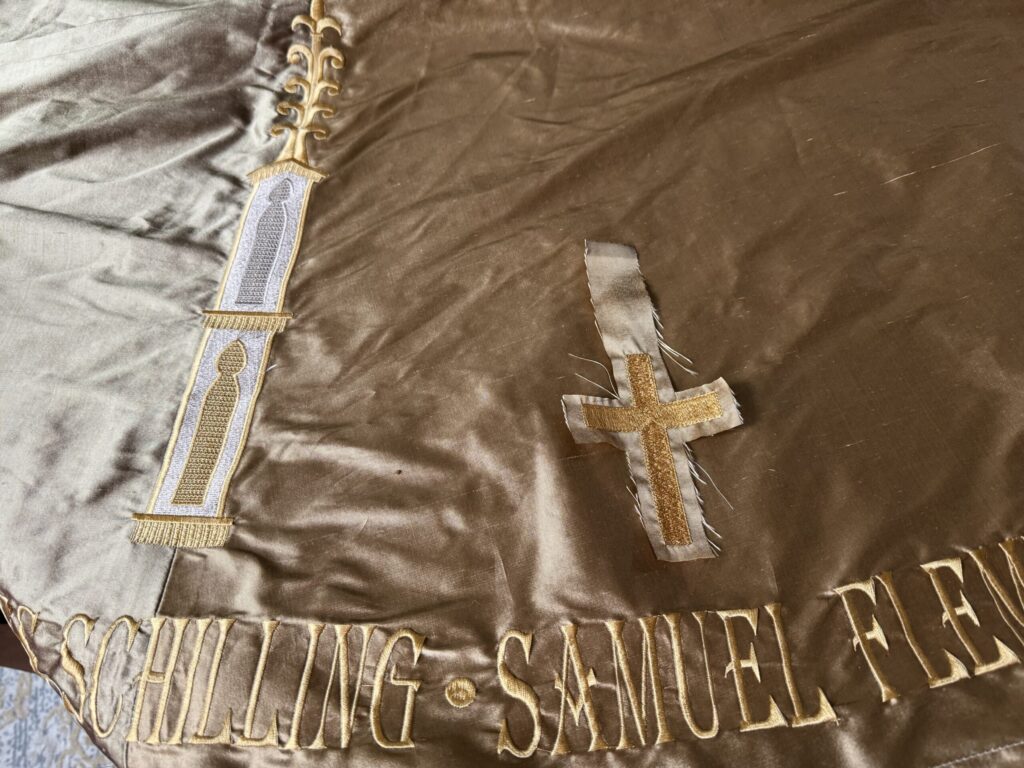
Somewhere along the way, I clipped the cope with my scissors – leaving that little telltale triangle-shaped slice in the middle of a silk panel. While it was not discovered at the very end of the process, it arrived at a moment when one decision was still unresolved: the final placement of the gold crosses.
Rather than seeing the hole as a setback, it became an unexpected point of clarity.
I still had not decided where to include the five gold crosses inspired by the roofline crosses on the church. Now the placement was clear – concealment and intention. This resolved both the practical problem and the lingering design question. What might have remained an abstract choice became concrete, grounded, and necessary.
This kind of moment is familiar to anyone who works closely with materials. Sometimes that mistake answers a question you have been holding open.
A Clasp Worthy of 100 Years
One final element remained: the cope clasp.
Commercial cope clasps are readily available, but they are typically generic and often poorly made—an unsatisfying conclusion for a garment that had been designed with such care. This cope required something different.
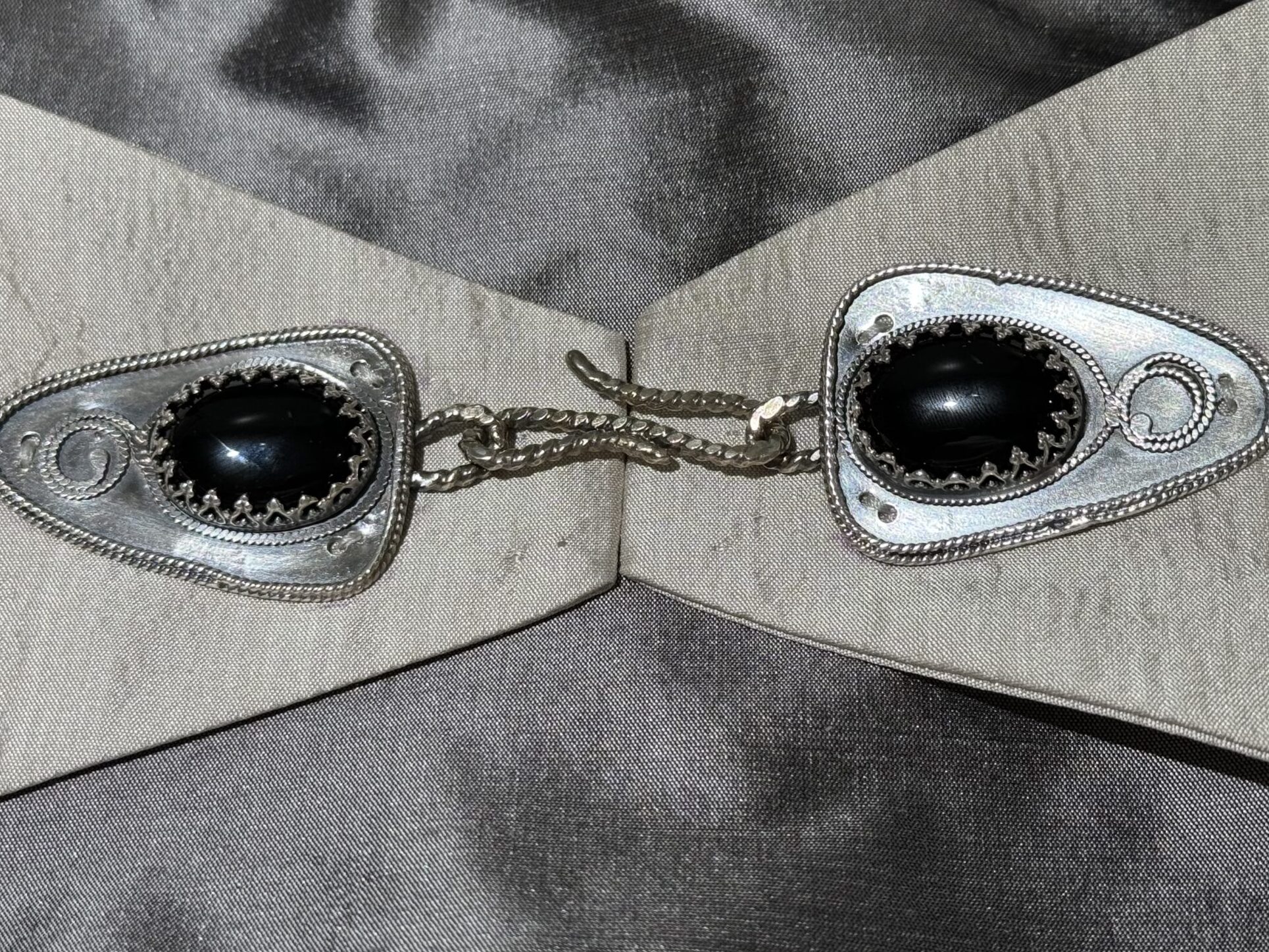
As it happened, my next-door neighbor is a glass and metal artist. Together, we discussed the needs of the garment and the visual language already established. She then designed and created a custom clasp specifically for this cope.
The finished piece is made of argentium silver with black onyx, and it completes the garment both functionally and visually. Rather than acting as an afterthought, the clasp became a final, intentional design decision—one that honors the same principles as the rest of the cope: quality materials, thoughtful making, and respect for use.
The Centenary Celebration
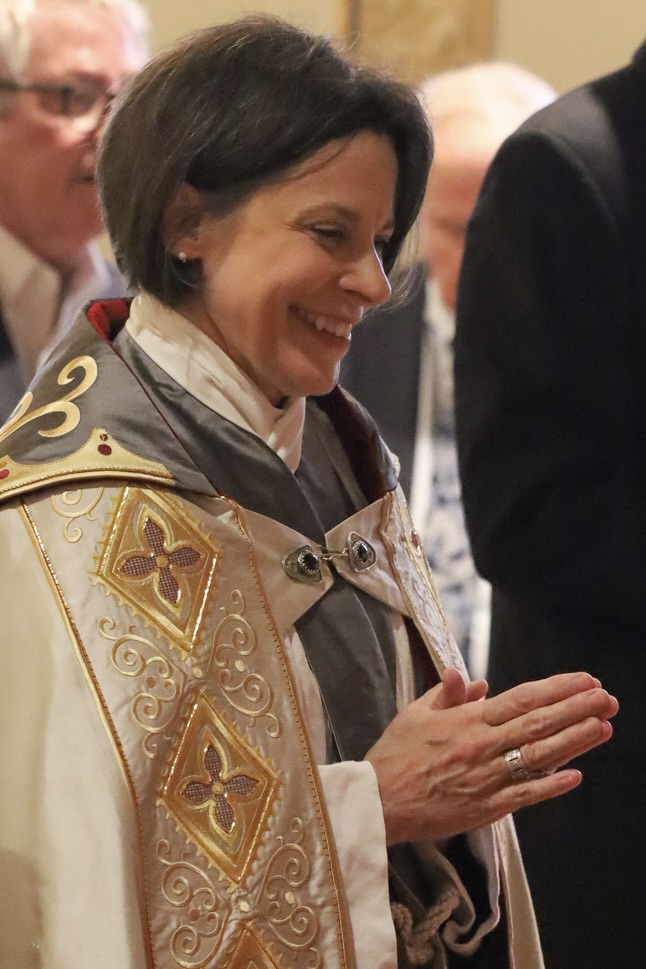
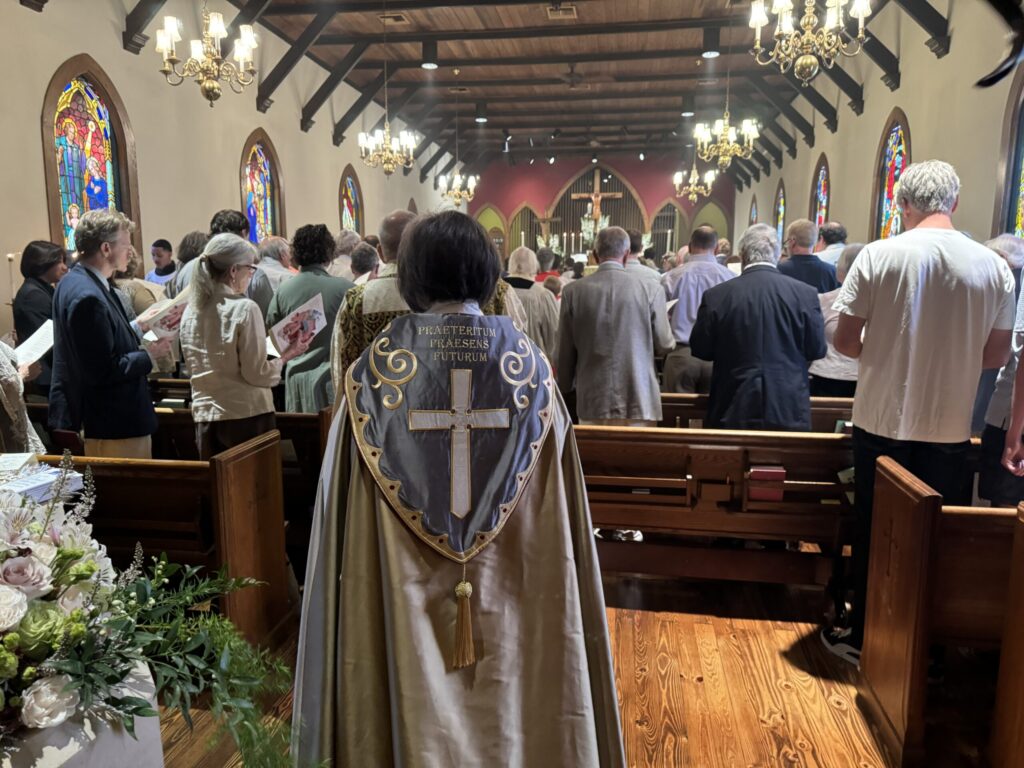
The parish’s 100-year celebration unfolded over an entire weekend, culminating in the principal Mass. The bishop was in attendance, underscoring the significance of the occasion.
During the liturgy, the cope was worn as part of a long procession around the congregation. In motion, the design came fully into its own—the color transitions reading softly, the embroidery catching light, and the work of many hands carried together through worship.
This is where vestments belong: not static or on display, but moving with the life of the church. Materials matter here. Silk responds to light, air, and motion; it shifts and settles as the body moves. It allows the garment to feel alive—participating in the liturgy rather than merely covering the wearer. That kind of movement and presence simply cannot be replicated in shiny, plastic-y, synthetic materials.
Use, Longevity & Stewardship
The Centenary Cope was made to mark a moment, but not only a moment. The choice of silk, sound construction techniques, and a custom clasp reflect an intention toward longevity—not only in durability, but in use.
Natural materials age, soften, and develop character through time and handling. They change as the life of the church changes, carrying memory rather than resisting it. With proper care, this cope should continue to serve the parish for decades, moving and breathing with worship as it has from the beginning.
A Closing Reflection
It was an honor to create this cope for the parish. From the earliest design decisions to the final procession, the work was shaped by trust, collaboration, and care.
The Centenary Cope now belongs fully to Church of Our Saviour. My hope is that it continues to be worn, carried, and used—holding the memory of its making while quietly serving the liturgy for many years to come.
Be sure to check out our Portfolio page to see the finished vestment!
Leave a Reply