
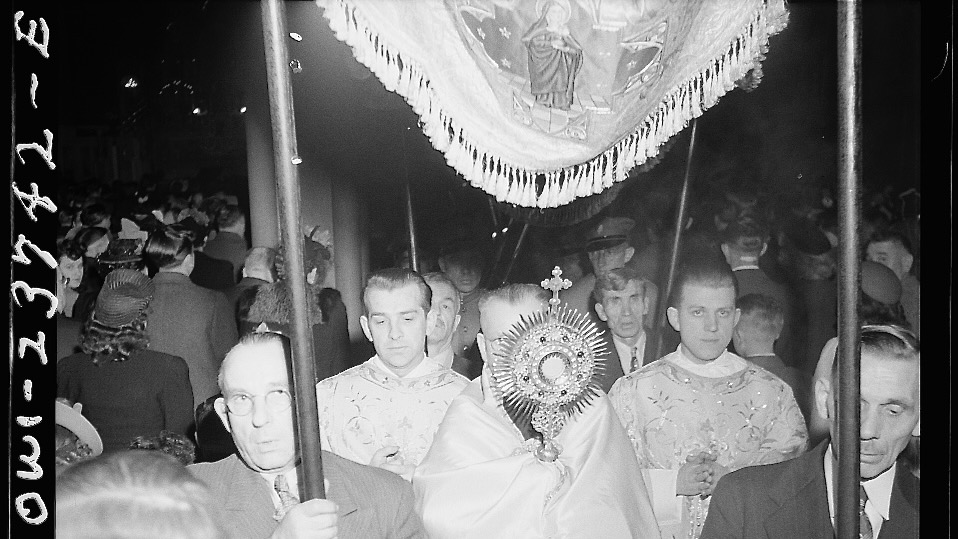
POST 1: A processional canopy is a textile carried on poles, traditionally used during Eucharistic processions to shelter and honor the Blessed Sacrament when it is carried in a monstrance. The canopy creates a visible, moving focal point in the procession—both practical and symbolic—marking the presence of the sacrament and giving it prominence within the community. While designs vary by parish and tradition, the underlying construction is consistent: a structured top, draped sides, and secure attachment points to the carrying poles.
This project began with an existing canopy that had served its parish well over many years. Rather than starting from theory or secondary references, I used that older canopy as my primary source—taking measurements, examining how the pieces were assembled, and noting where the design worked well and where it could be improved. The finished canopy top measures 70” x 52”, with a 13” flap extending down on each side to create the characteristic drape. At each corner of the top are attachment points that connect the canopy to the four poles used by the procession bearers.
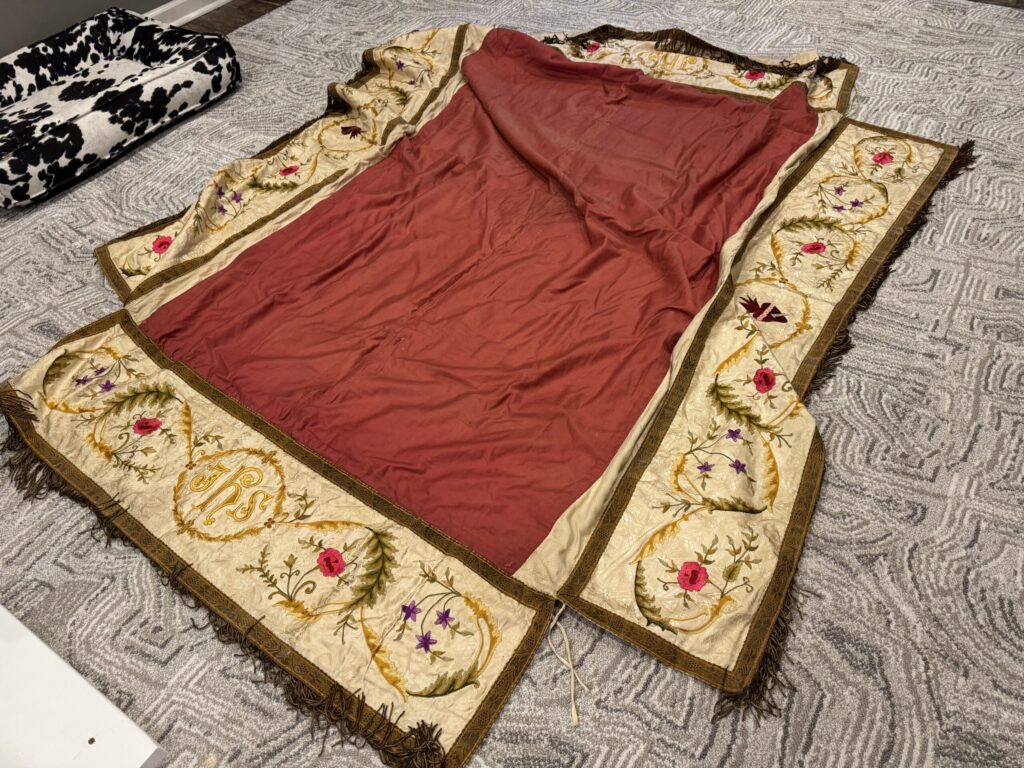
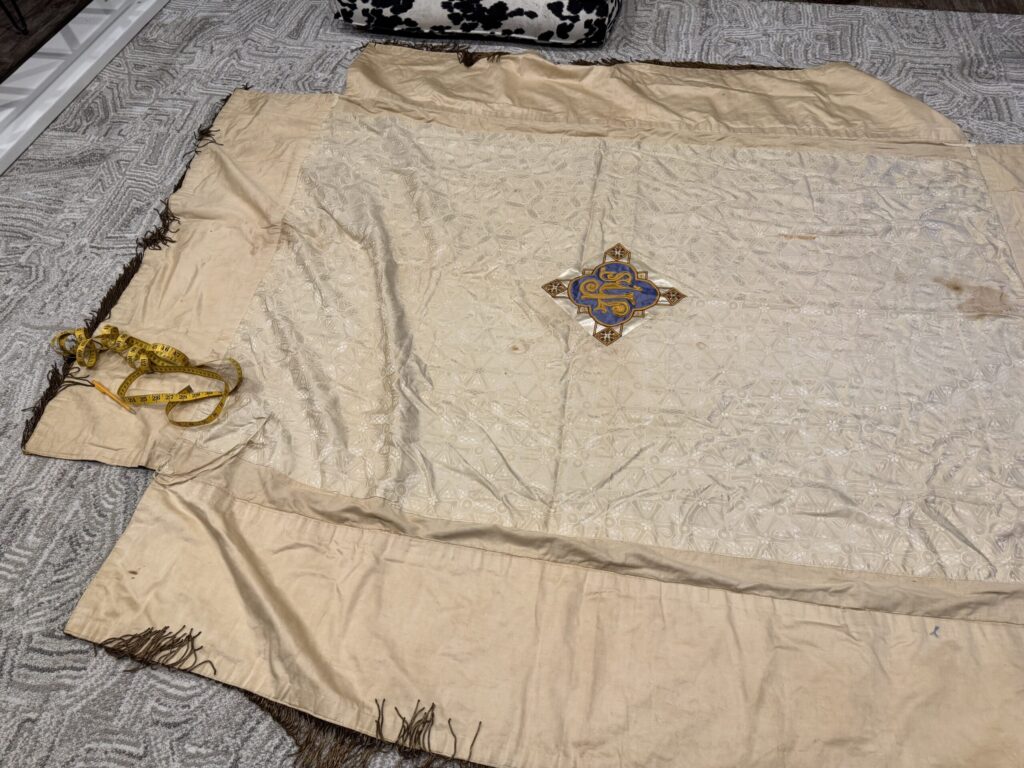
In this how-to, I’ll walk through how I translated those measurements into a new canopy design, including decisions around structure, proportions, and attachment methods. For the pole connections, I’m using narrow webbing loops sewn into the corners, paired with small carabiners to attach the canopy securely to the poles. This approach allows for strength, ease of setup, and flexibility during use—an important consideration for a piece that must be carried, assembled, and disassembled repeatedly. From here, we’ll move step by step through measuring, cutting, and constructing the canopy.
Photo credit: “Procession of the Blessed Sacrament during Easter High Mass at the Corpus Christi Church in the Polish community, Buffalo, New York, April 1943.” Public domain, photo by Marjory Collins / U.S. Farm Security Administration – Office of War Information, from Library of Congress via Wikimedia Commons
Leave a Reply