
Category: Portfolio
-
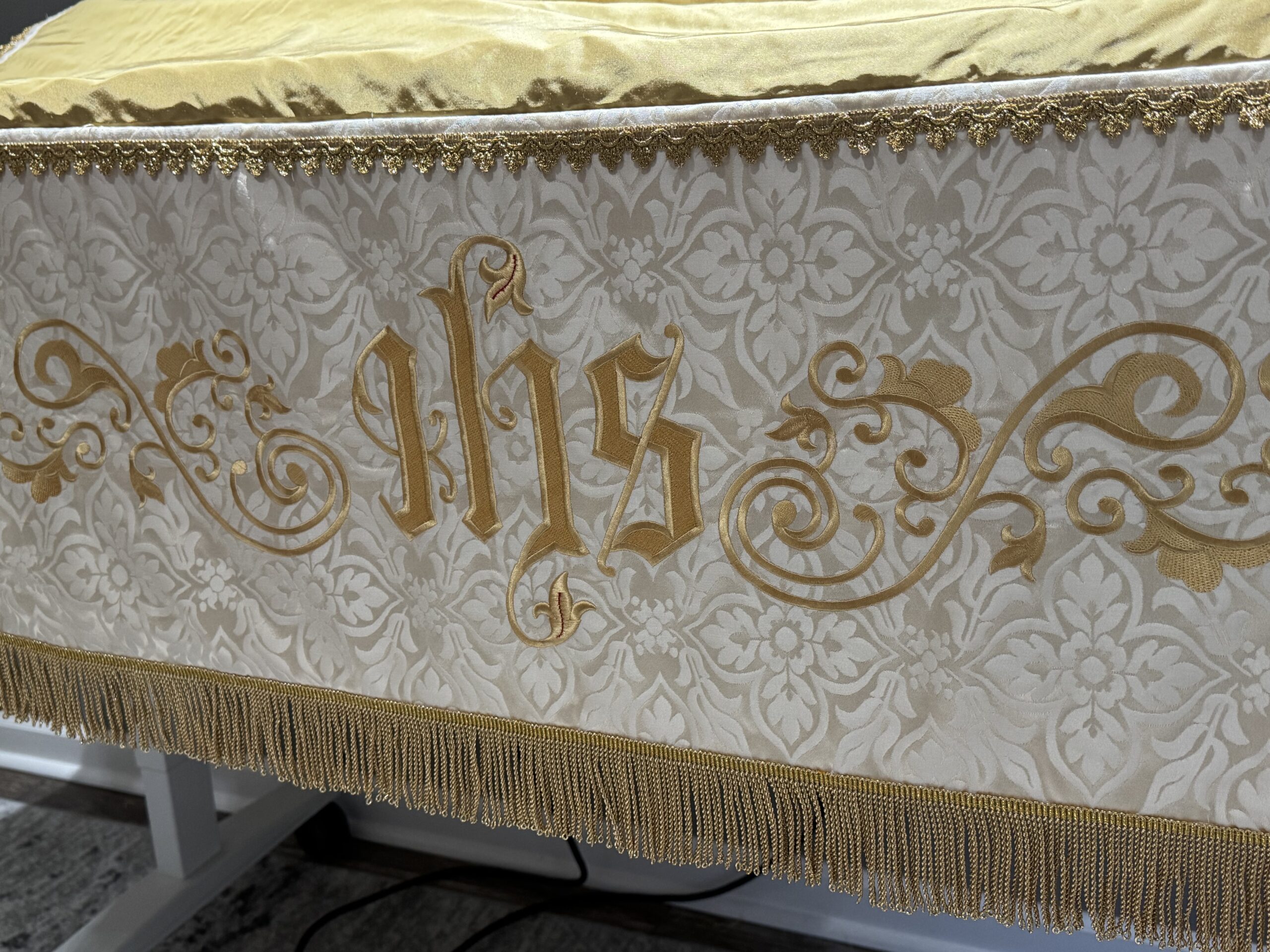
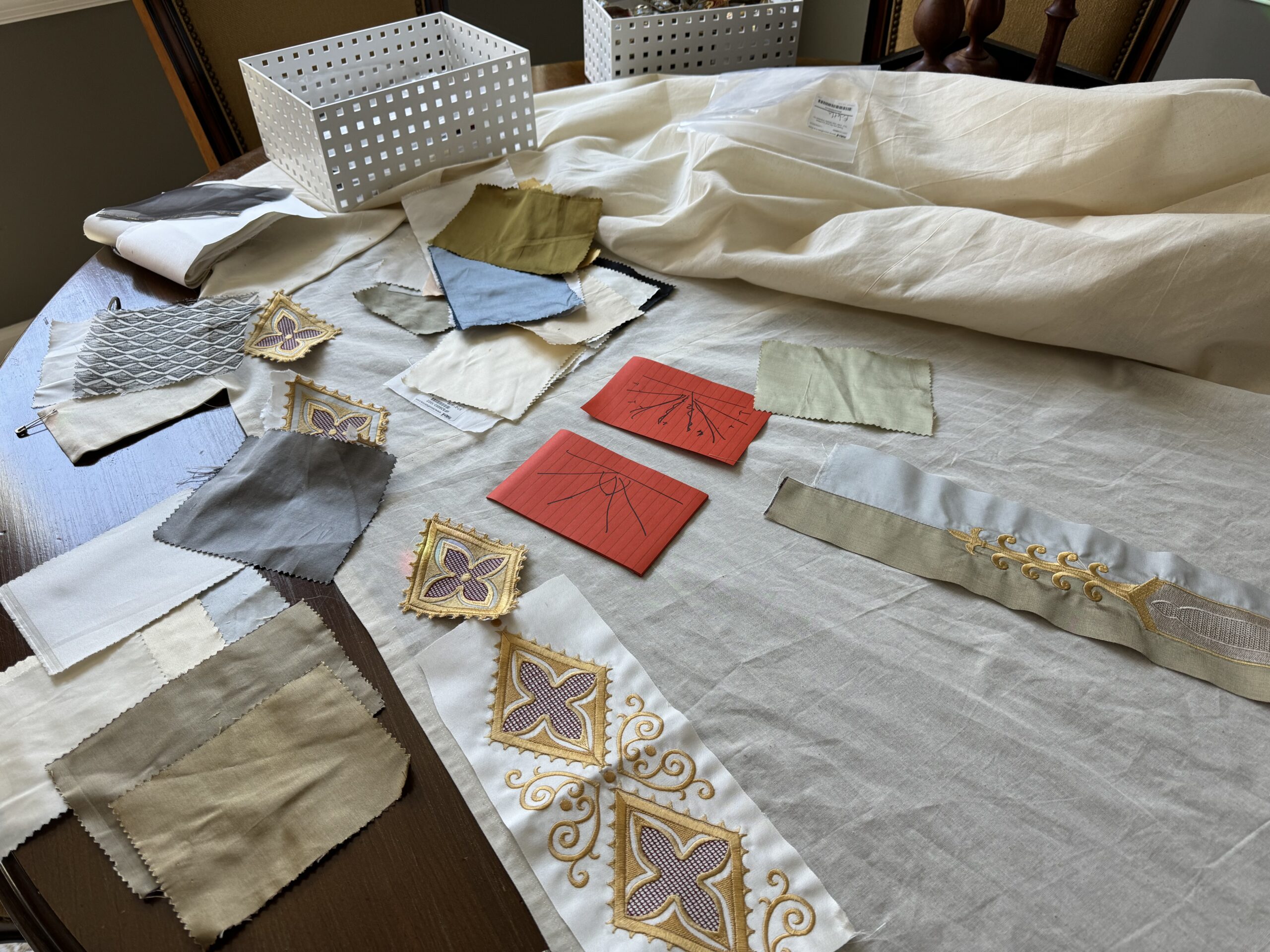
POST 4: With all the embroidery complete and every panel cut to its final dimensions, it was time to assemble the canopy. This was my first canopy project, and while I’ve spent decades constructing garments and vestments, this piece challenged me in ways I didn’t anticipate. The deadline was firm—VaHi Mardi Gras parade was approaching—and…
-
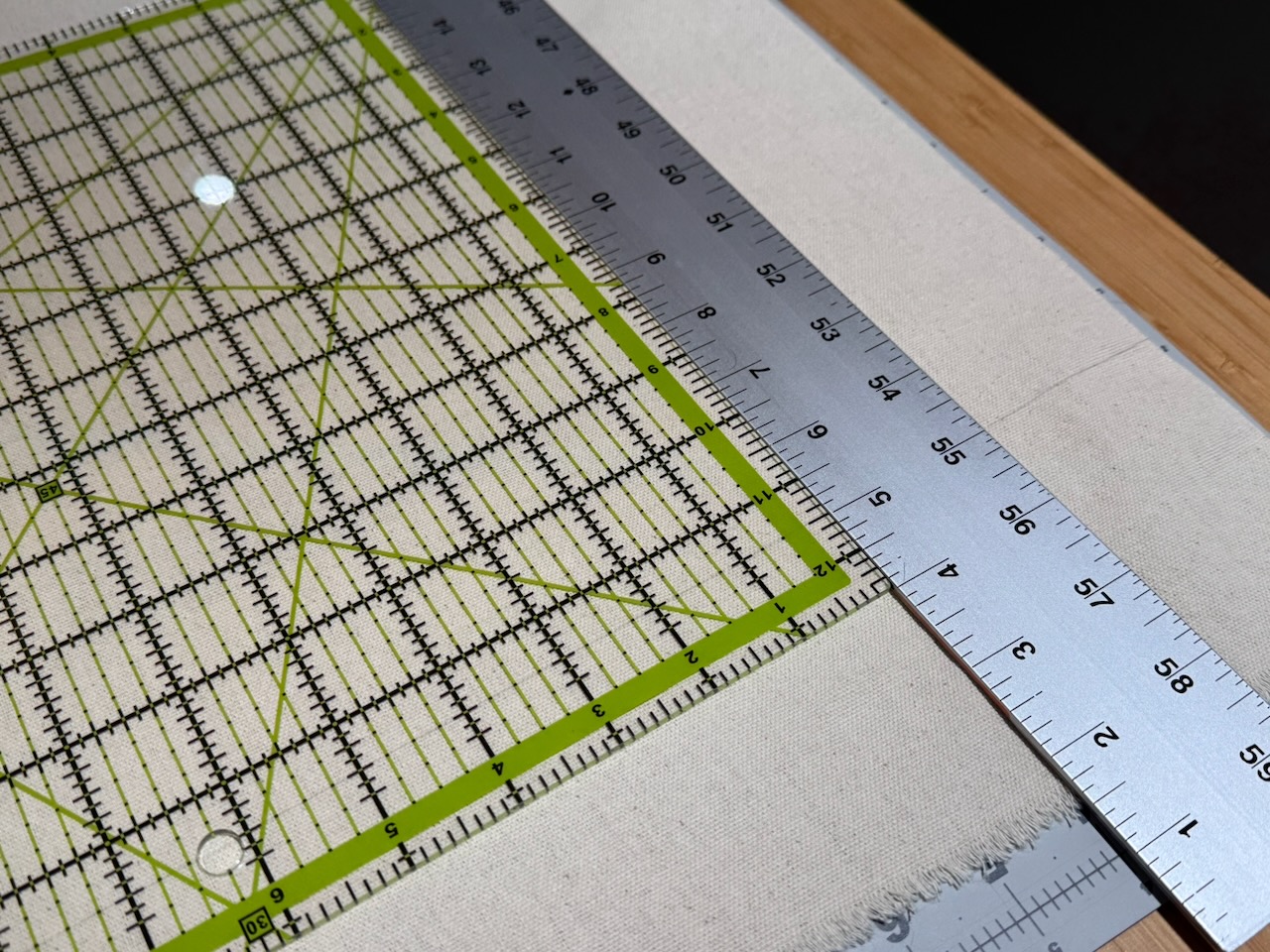
POST 3: This stage of the project is about precision. With the rough cuts and embroidery complete, it’s time to trim everything down to its final pattern dimensions. This step serves two important purposes. First, it allows the embroidery to be positioned intentionally. Now that the stitched elements are complete, I can place them exactly where they…
-
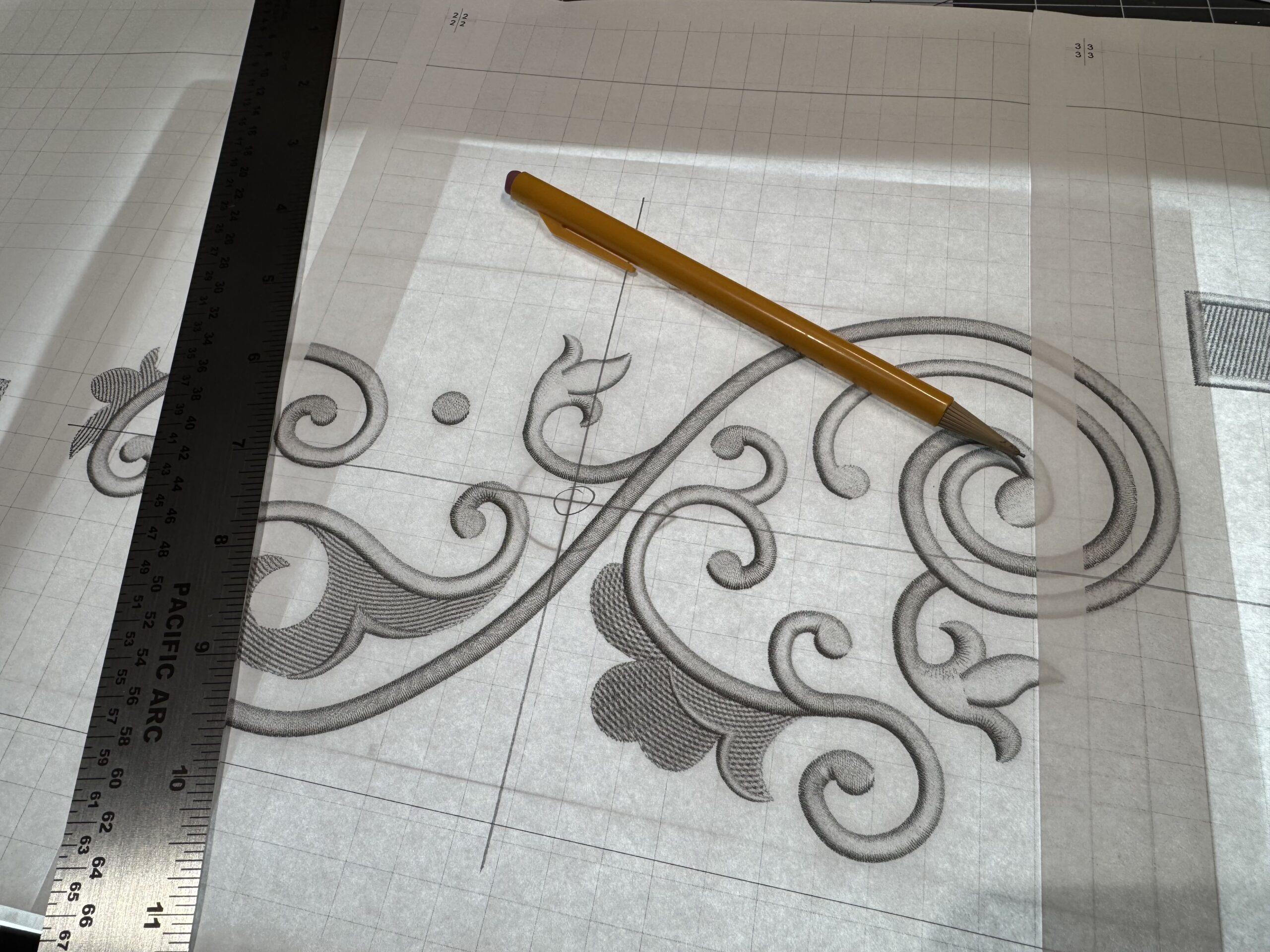
POST 2: For this canopy project you’ll need fabric, interlining, and a few basic sewing supplies. Because this piece is meant to be seen from every angle — under it, around it, up close, far away — the way the fabrics sit in relation to each other is important. In my design, the “right” side of the main…
-
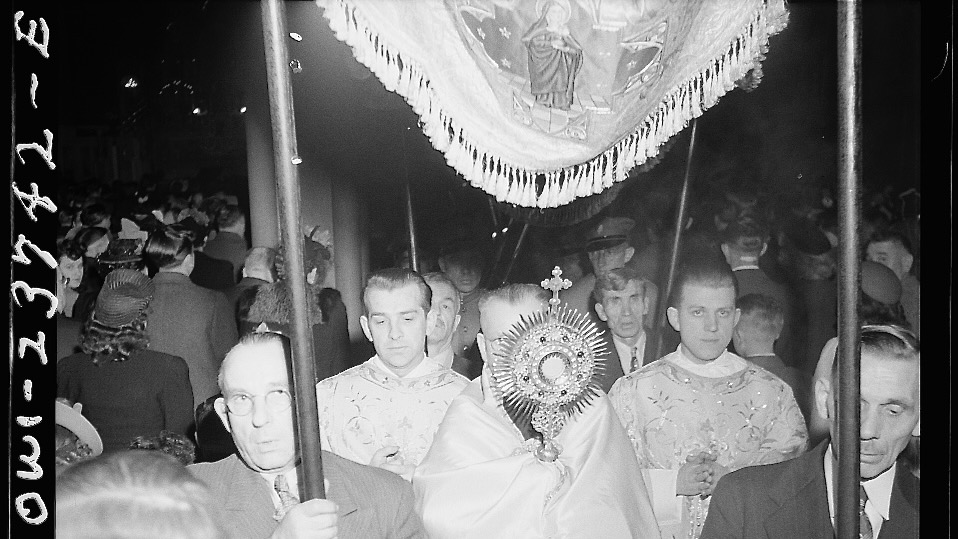
POST 1: A processional canopy is a textile carried on poles, traditionally used during Eucharistic processions to shelter and honor the Blessed Sacrament when it is carried in a monstrance. The canopy creates a visible, moving focal point in the procession—both practical and symbolic—marking the presence of the sacrament and giving it prominence within the community. While…
-
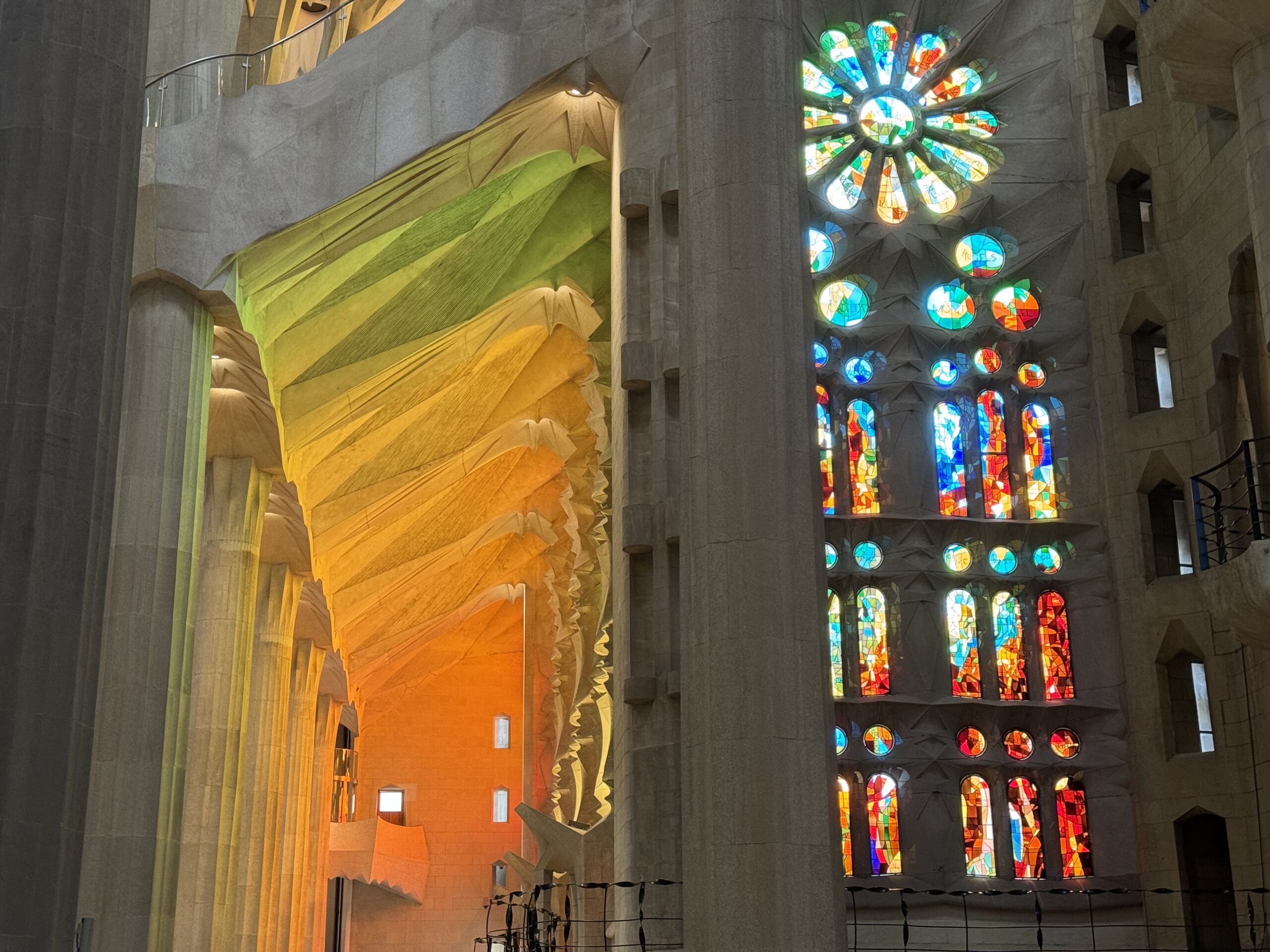
Inspiration doesn’t always arrive on command. This rose set began with absence—no image, no color story, no clear starting point. Normally, I receive a fairly complete vision early on, most often beginning with the chasuble. From there, the details of the design unfold naturally: fabric choices, colors, proportions, techniques. This time, nothing came. I wandered…
-
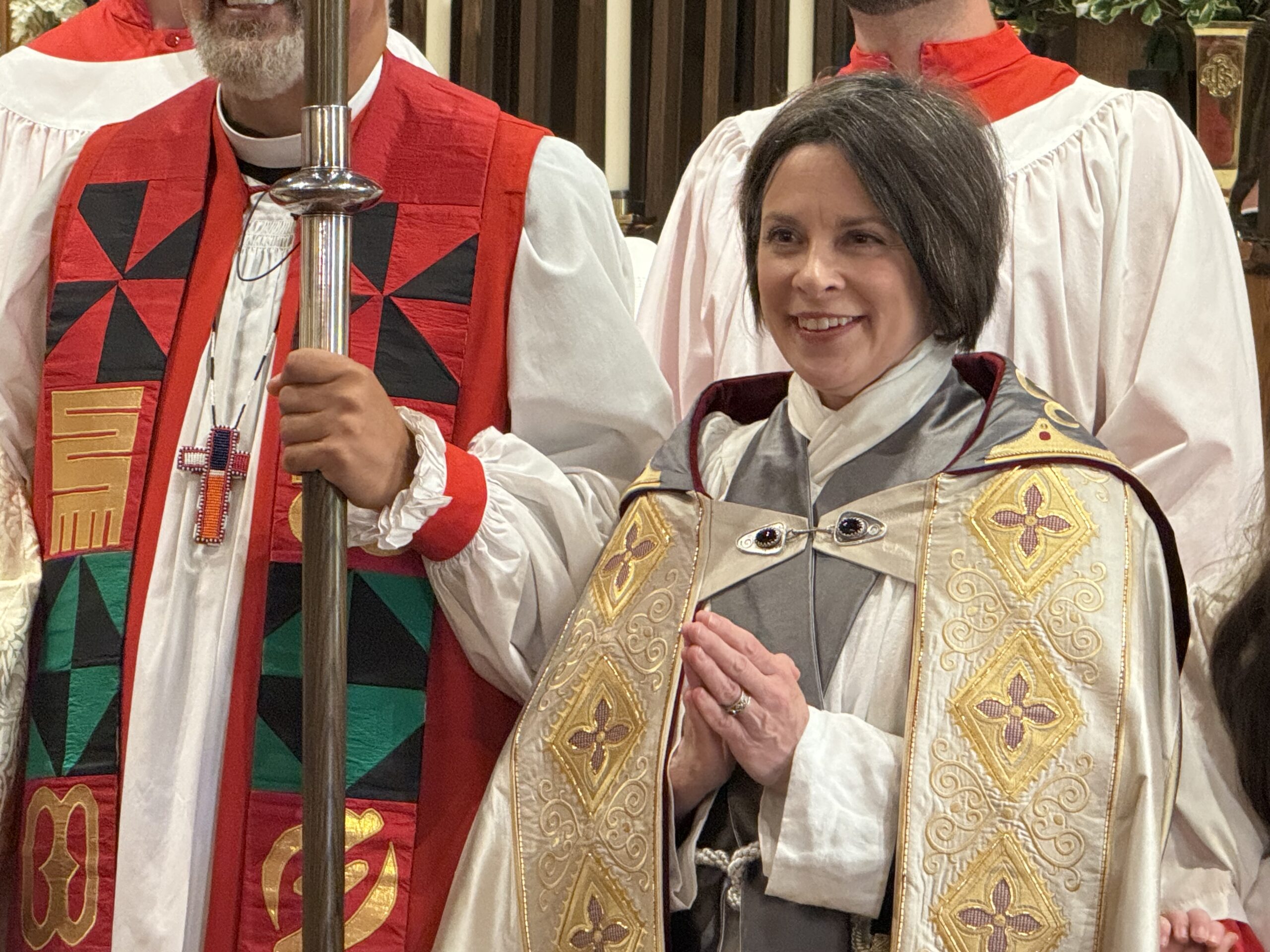
The final stages of the Centenary Cope brought together months of design, embroidery, and shared work into a single garment. This phase is less about invention and more about resolution—aligning structure and meaning so the cope could move from the studio into liturgical use. Final Assembly With the embroidery complete and the parish-worked elements returned,…
-
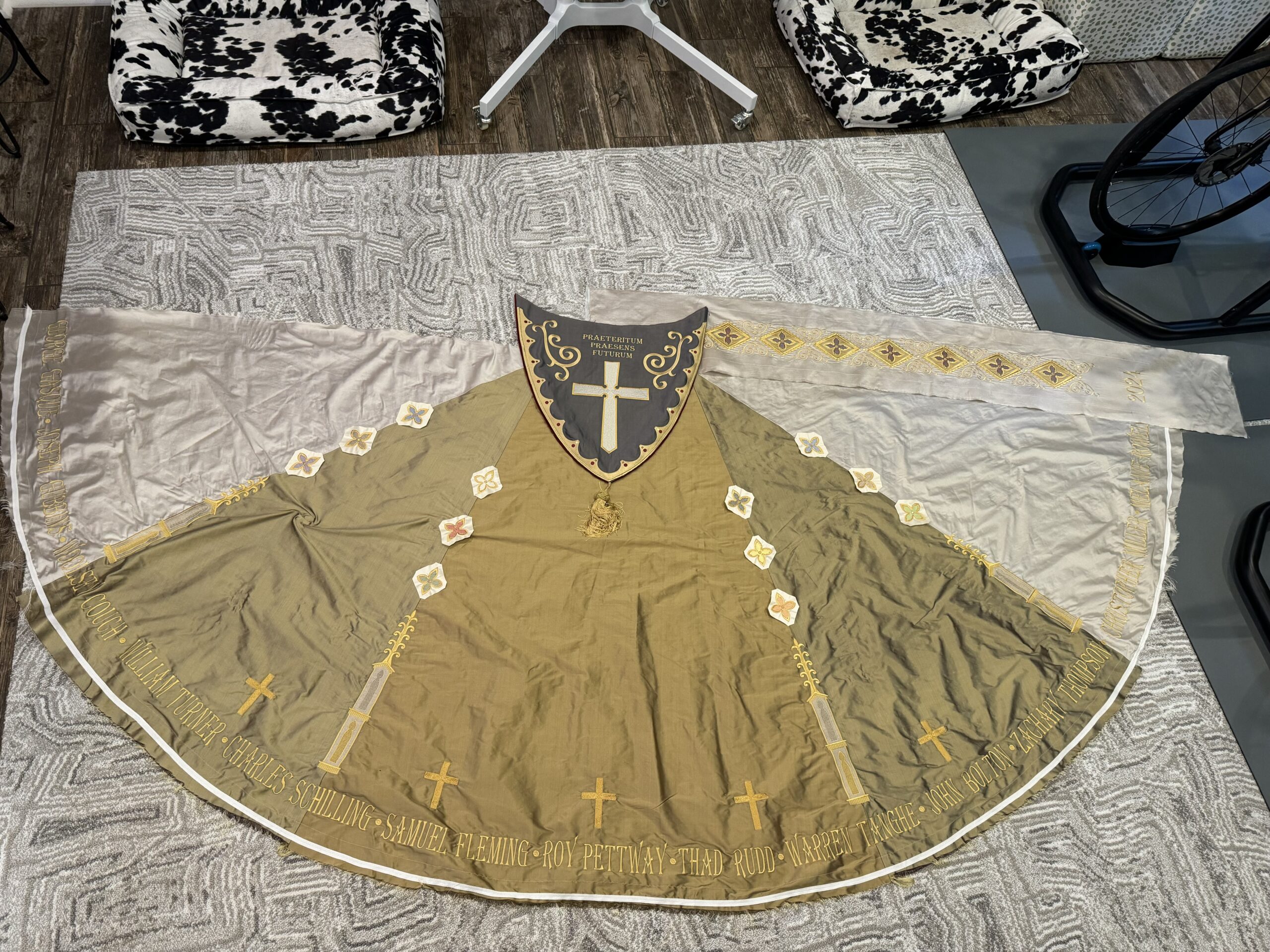
The idea to involve the parish directly in the making of the Centenary Cope did not begin with me. It was my husband who first asked the question: What if the parish helped with the cope? The challenge was finding a way to invite participation that was meaningful without being intimidating—and that would preserve the integrity…
-
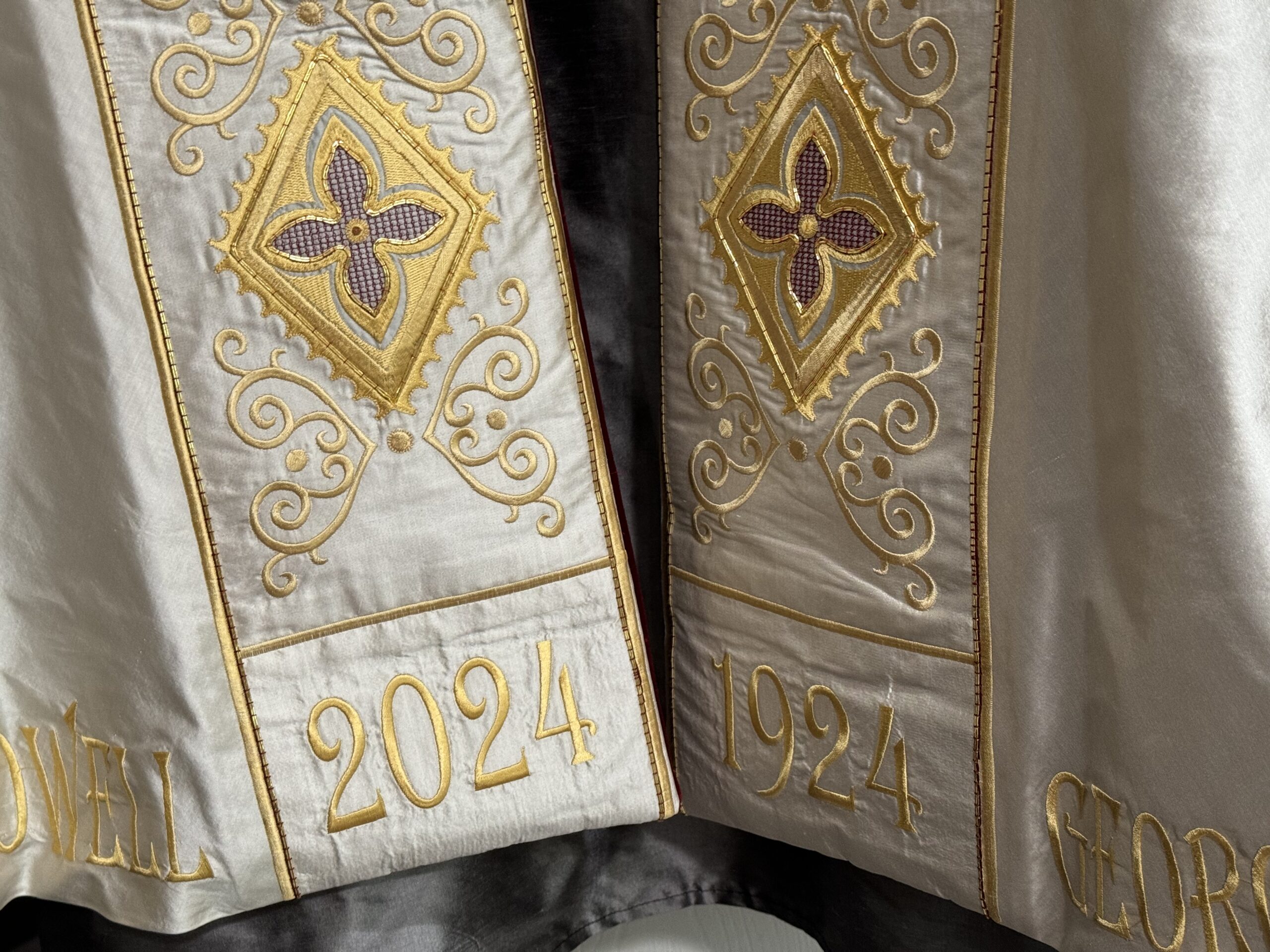
The embroidery for the Centenary Cope was designed to belong unmistakably to the Church of Our Saviour. Rather than applying a generic decorative program, the motifs were drawn directly from the parish’s architecture, grounds, and history, then translated into embroidery that could function across silk, seams, and movement. Every element had a role to play—some…
-
My church celebrated 100 years this year. As part of the celebration, I decided to construct a Centenary Cope. For a centenary celebration, the vestment itself must carry memory, continuity, and restraint. This cope was never intended to be ornamental for its own sake. It needed to serve the liturgy, honor the clergy who had…