
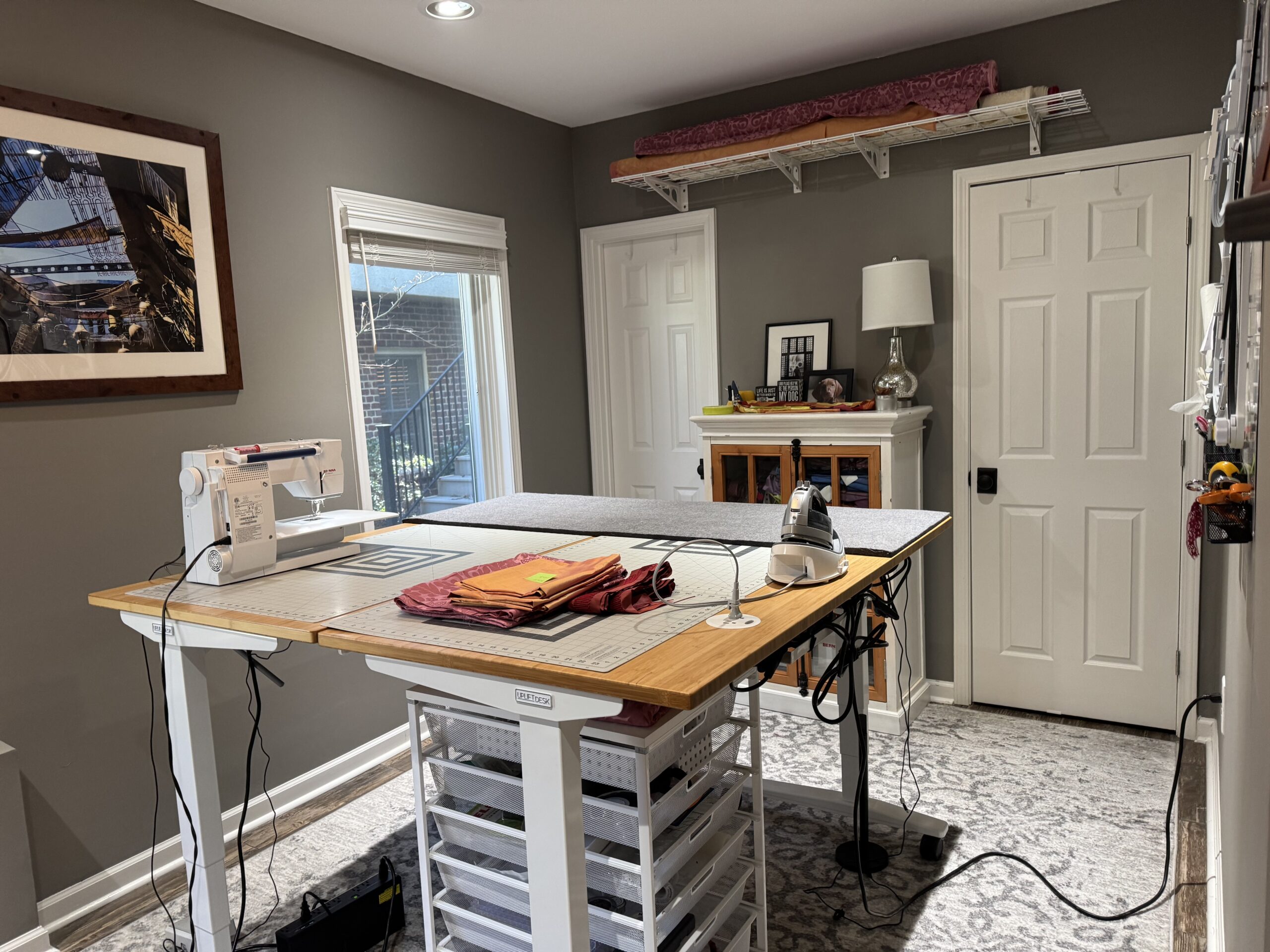
Someone asked me recently how I cut out vestments — especially since many of the pieces are very large. Chasubles, copes, dalmatics… these aren’t projects that politely fit on a standard sewing table.
In a previous house, the answer was simple: I had a dedicated sewing room with a ~7’ × 7’ cutting table made out of two doors. It was glorious. Fabric could be laid out flat, patterns could stay in place, and nothing needed to be rushed or folded away mid-thought.
Vestment making requires moving between vastly different kinds of work .
This house is different. The space is smaller, shared, and has to work harder. So instead of trying to recreate what I used to have, I redesigned how I work. What emerged is a workspace with three “modes,” each optimized for a different focus of vestment making.
Regular Construction & Embroidery
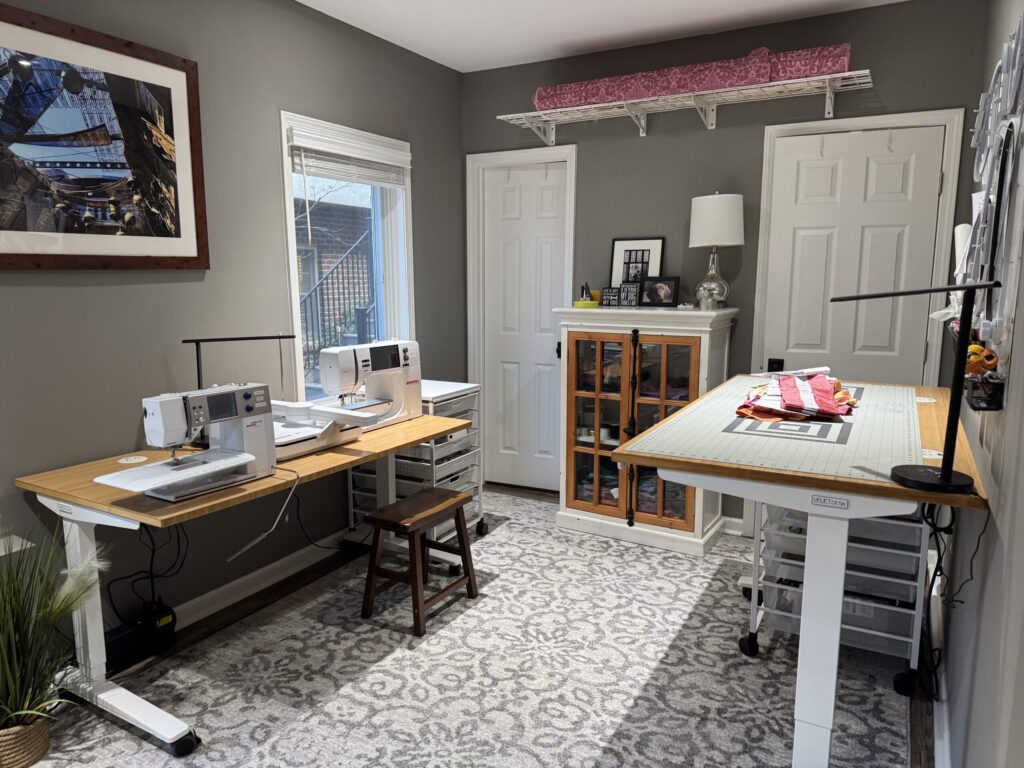
This is the most compact mode — focused, seated work where precision matters more than surface area. It’s where detail lives. BTW, that area rug on the ground is 8′ wide and each work table is 30″ deep.
Cutout Mode
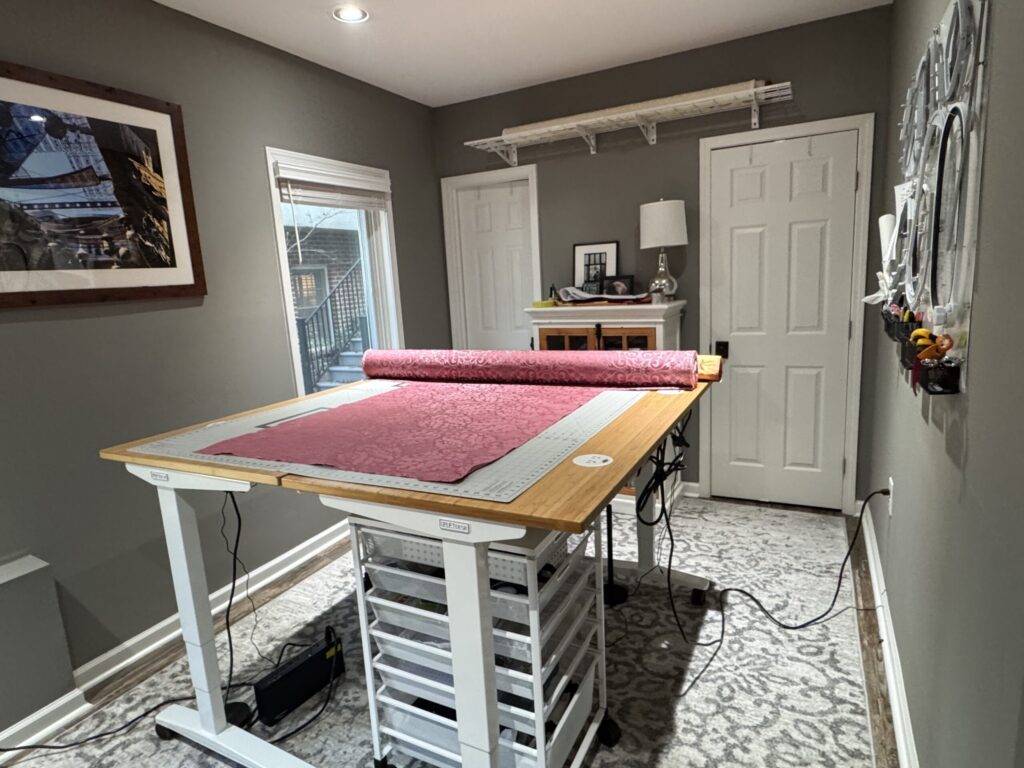
When it’s time to cut fabric, everything changes. Vestment pieces are large, directional, and unforgiving of shortcuts. Grain matters. Alignment matters. Space matters. Again, that area rug is 8′ wide.
Large-Scale Design & Construction
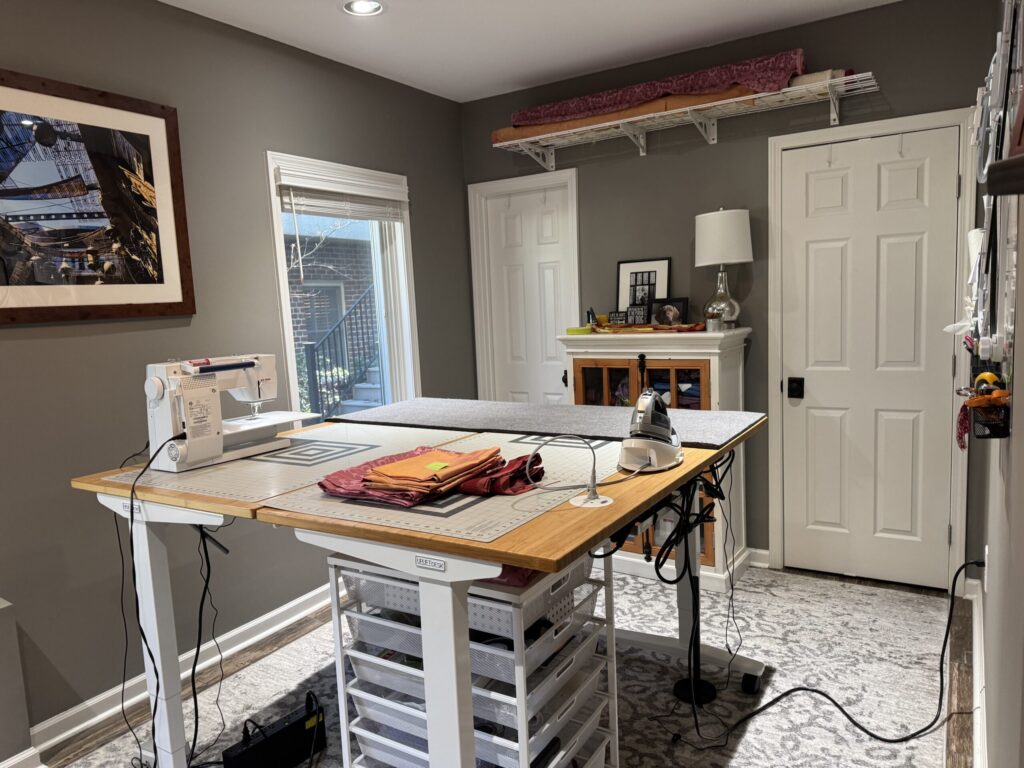
This is the phase where multiple components come together — where proportion, balance, and flow become visible at full scale. (And Yes, I can sew on my machine while standing!)
To make this possible, I use adjustable tables that raise and lower and can be pushed together when needed. When fully configured for cutout or large design work, they create roughly a 5’ × 5’ continuous surface. It’s not the same as a permanent cutting table — but functionally, it does the job remarkably well.
What I’ve learned is that a good workspace isn’t about size. It’s about intentional flexibility.
Vestment making requires moving between vastly different kinds of work — contemplative handwork, technical construction, and architectural-scale layout. Designing a space that can shift modes allows me to adapt to each phase. This approach mirrors the work itself: adapting tradition to present realities, without losing reverence or precision.
If you’re working with limited space — whether sewing, making, or designing — the question isn’t “How do I fit my work into this room?” It’s “How can this room transform to support the work when it matters most?”
That shift changes everything.
Leave a Reply