
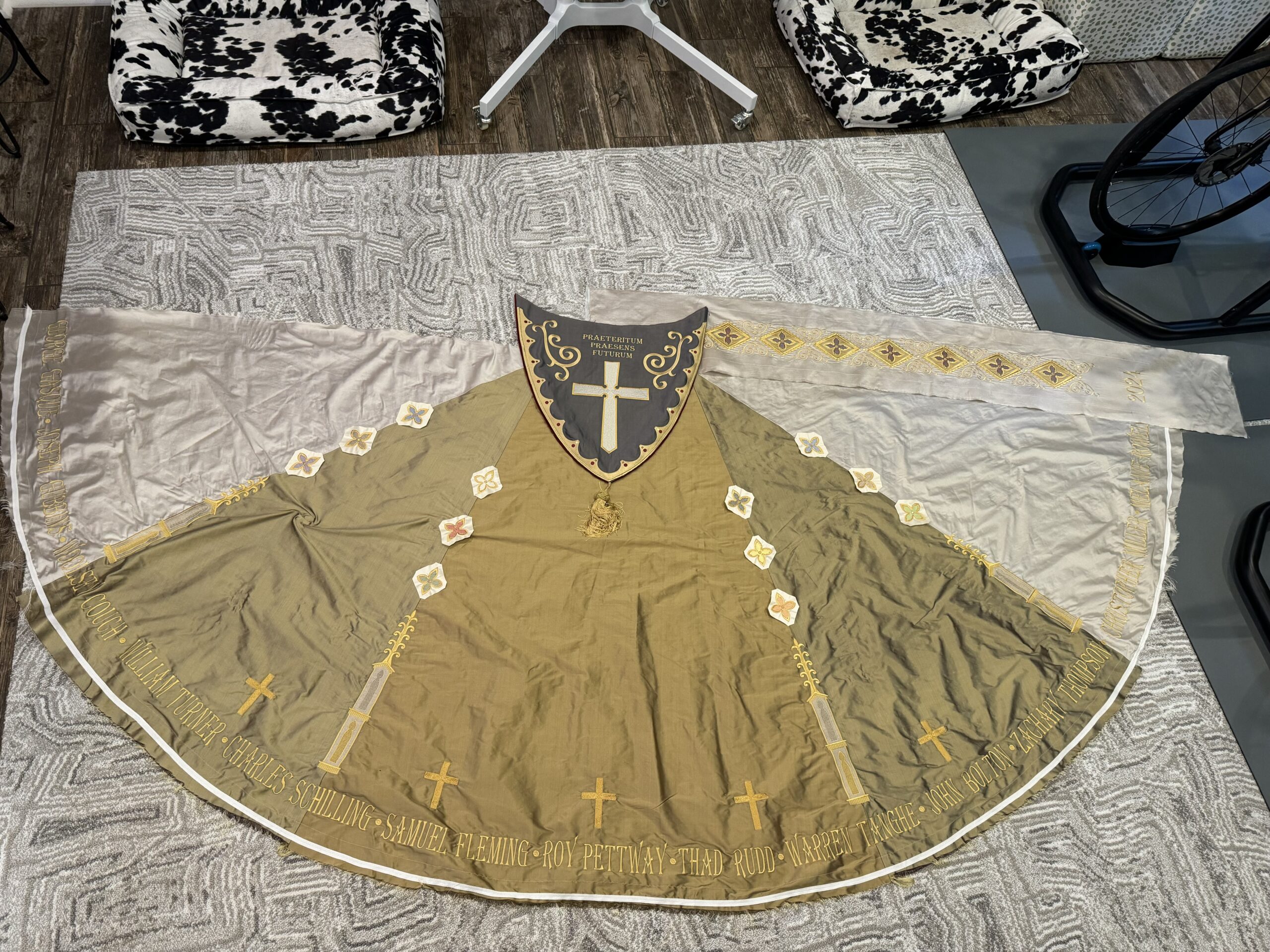
The idea to involve the parish directly in the making of the Centenary Cope did not begin with me. It was my husband who first asked the question: What if the parish helped with the cope?
The challenge was finding a way to invite participation that was meaningful without being intimidating—and that would preserve the integrity of the finished garment. The solution came through a small but essential element of the goldwork: the spangle (paillette) placed at the center of each diamond and flower.
Designing an Opening for Participation
Every diamond and flower was fully stitched by me before it ever left the studio. The embroidery, padding, and couched gold threads were complete. The only remaining step was attaching the spangle at the center—an element that carries both visual and symbolic weight.
This made it the ideal point of entry.
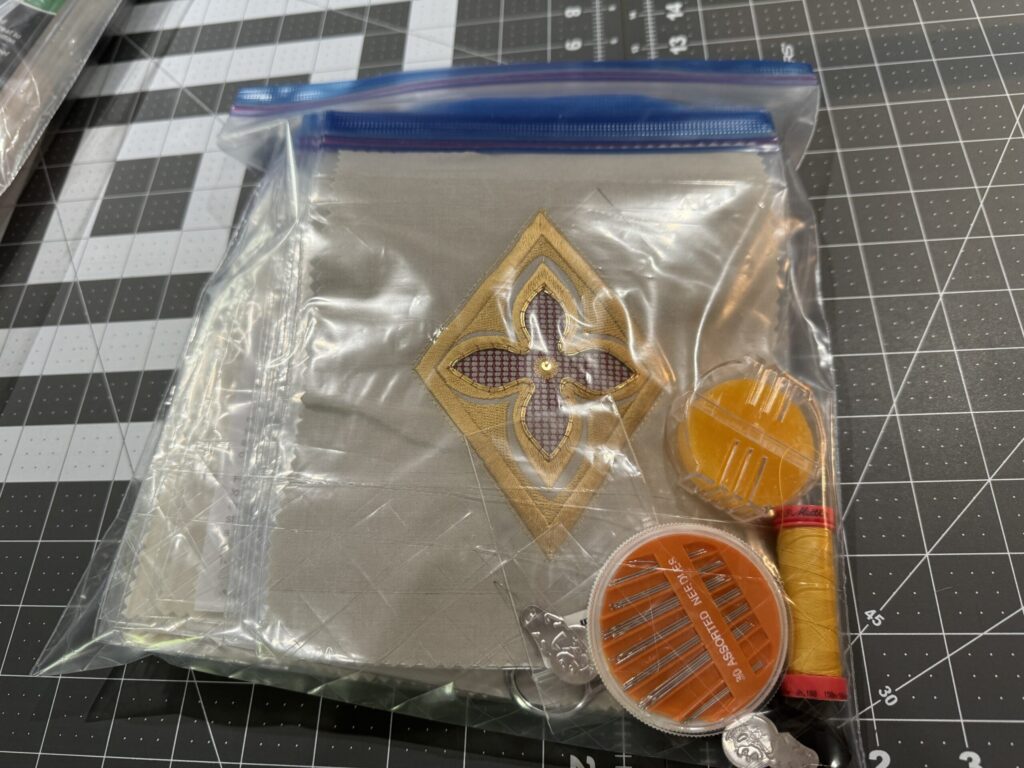
Each embroidered piece was packaged individually into a small kit:
- One embroidered diamond or flower
- The thread already knotted onto the piece
- A spangle partially secured with a single stitch
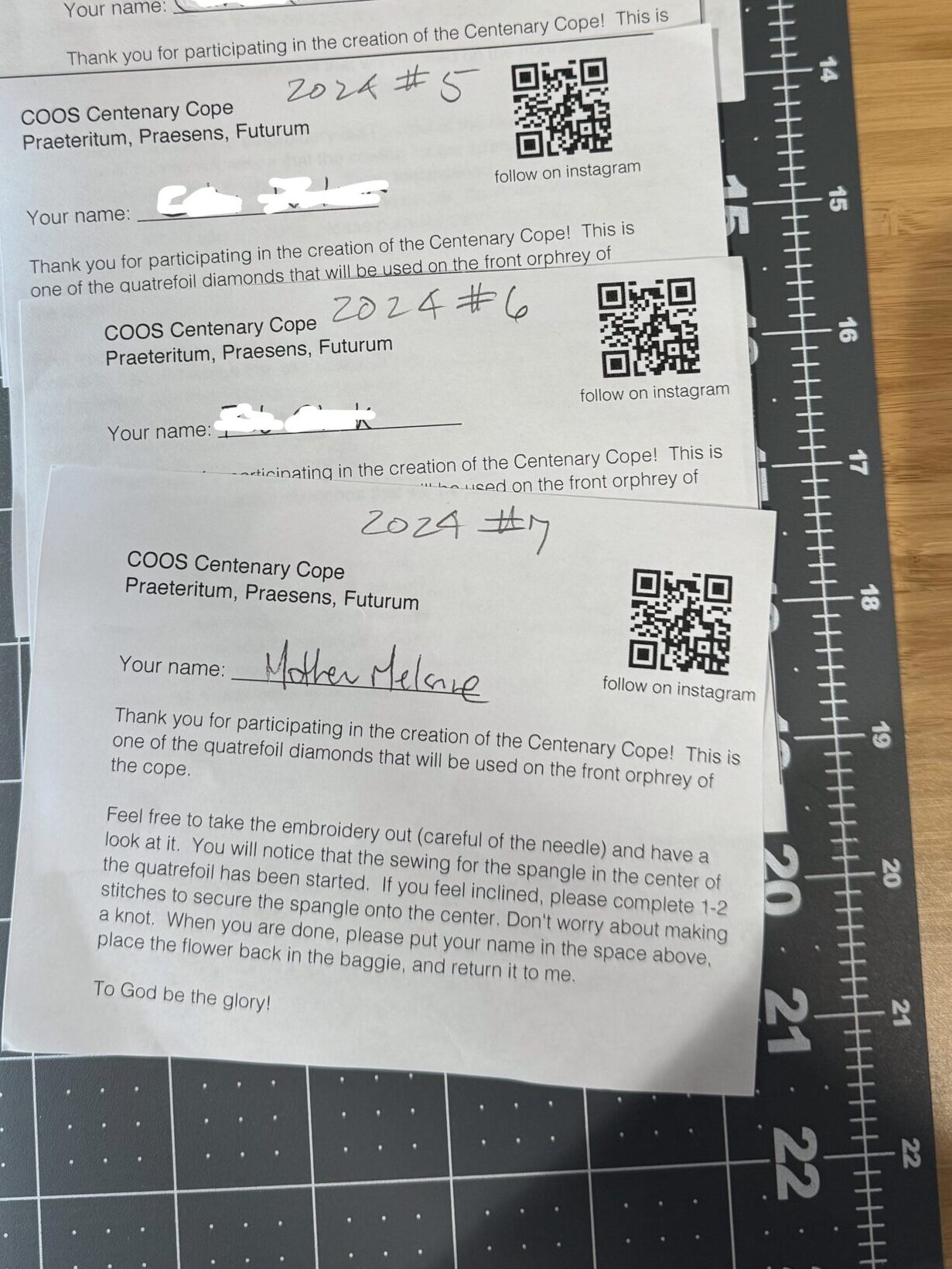
- A printed card with instructions and space for a name
The task was intentionally simple. Participants were invited to do one of two things:
- Finish stitching the spangle to the embroidery, or
- Spend time looking at the piece, examining the stitching, saying a prayer, and returning it
The only requirement was that each person write their name on the card inside the kit, so we could record everyone who had participated.
How the Kits Moved Through the Parish
The kits were first brought to a vestry meeting. After choir practice, members of the choir came by and completed several more. The remaining kits stayed in the church office, where Mtr Melanie invited parishioners who stopped by to take part.
The process unfolded organically, without pressure or supervision. People chose their level of engagement for themselves.
What Actually Happened
Every person who took a kit chose to participate.
No one opted out.
Some stories still make me smile:
- One person completed only a single stitch—but completed it nonetheless
- One participant struggled so much that the back of the embroidery became a tangle of knots, even though only a few stitches were required
- One person finished their first kit so quickly that they asked for – and completed – a second kit
- Another worked so hard on their first that they declined to take on any more
The range of outcomes was wide. The commitment was universal.
From Hands to Garment
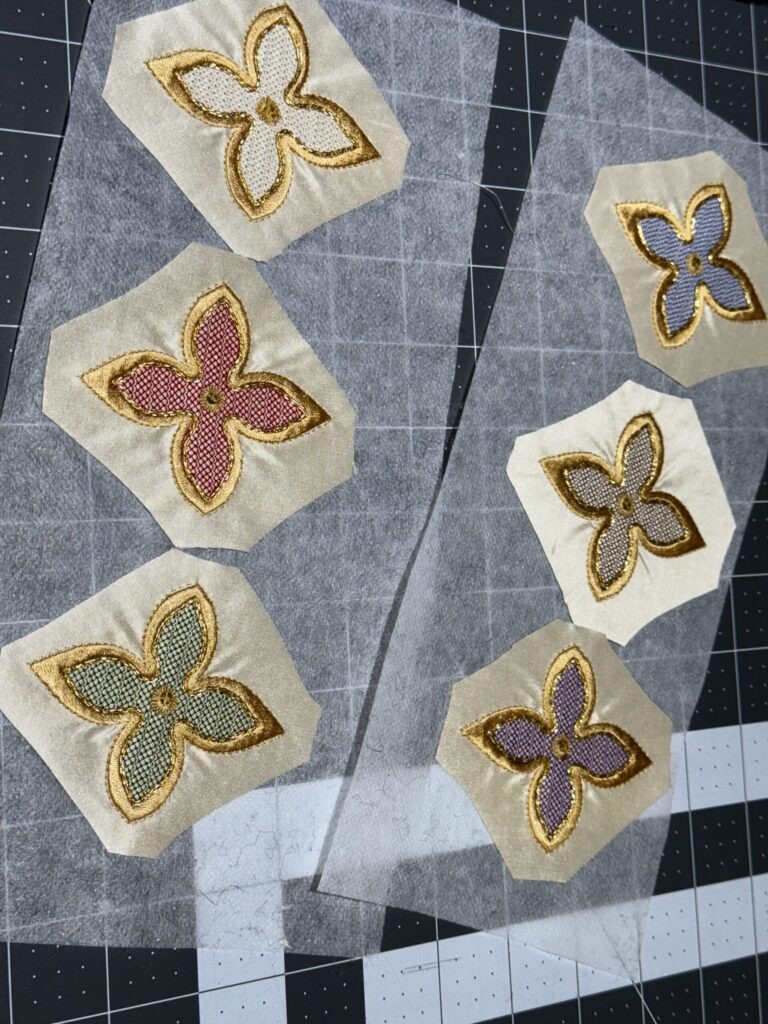
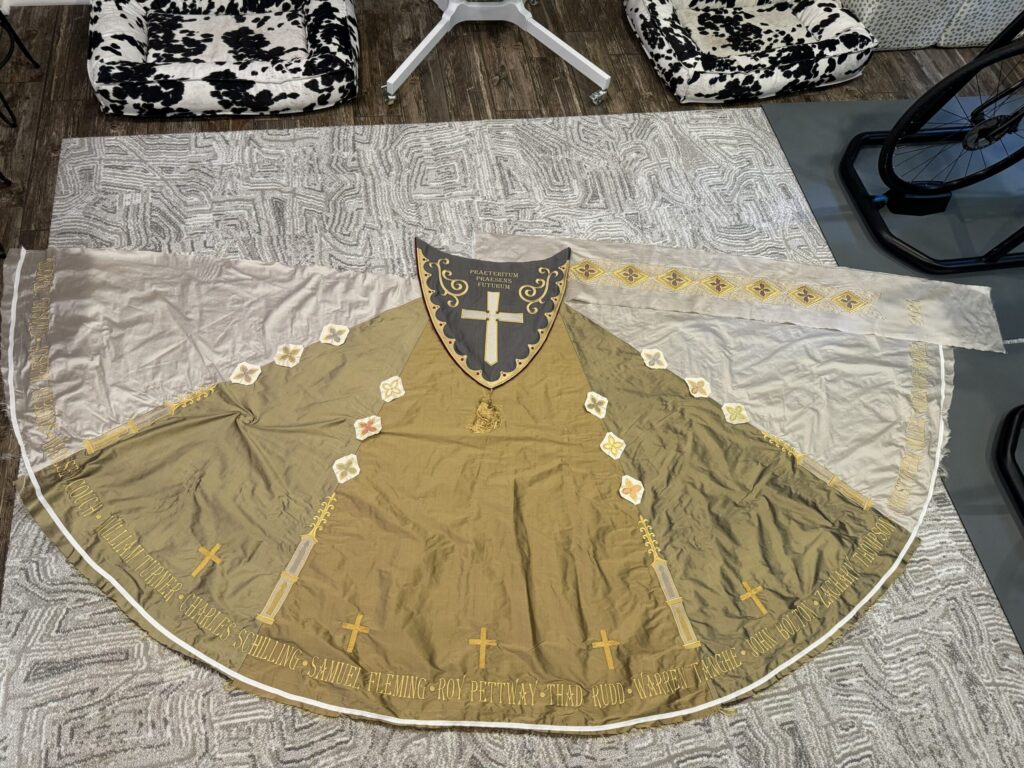
Once the kits were returned, the completed pieces came back to the studio. The flowers were then attached along the seams of the cope, where they help mediate the color transitions between silk panels. The diamonds were applied to the front of the cope, forming its central vertical axis.
One of the diamonds was completed by Mtr. Melanie Rowell herself, and now sits among the others—indistinguishable in placement, but known in its making.
The cards, each bearing the name of the person who completed the kit, became a quiet record of participation documented in the cope’s provenance. Together they tell a parallel story to the embroidery itself.
Why This Mattered
This was never about efficiency or delegation. It was about allowing space for the parish to place their hands—briefly, imperfectly, faithfully—into something that would outlast the moment.
The work was small. The contribution was real.
When the cope is worn, these stitches are not visible individually. But they are present, carried forward in procession, held together by structure, design, and shared care.
Looking Ahead
In the next post, I’ll turn to the final stages of the cope’s construction—bringing all of these elements together, finishing the garment, and preparing it for use in the centenary celebration.
Leave a Reply